
Amirani
Georgian culture hero who defied God and stole fire for humanity.

Wikipedia / Wikimedia Commons
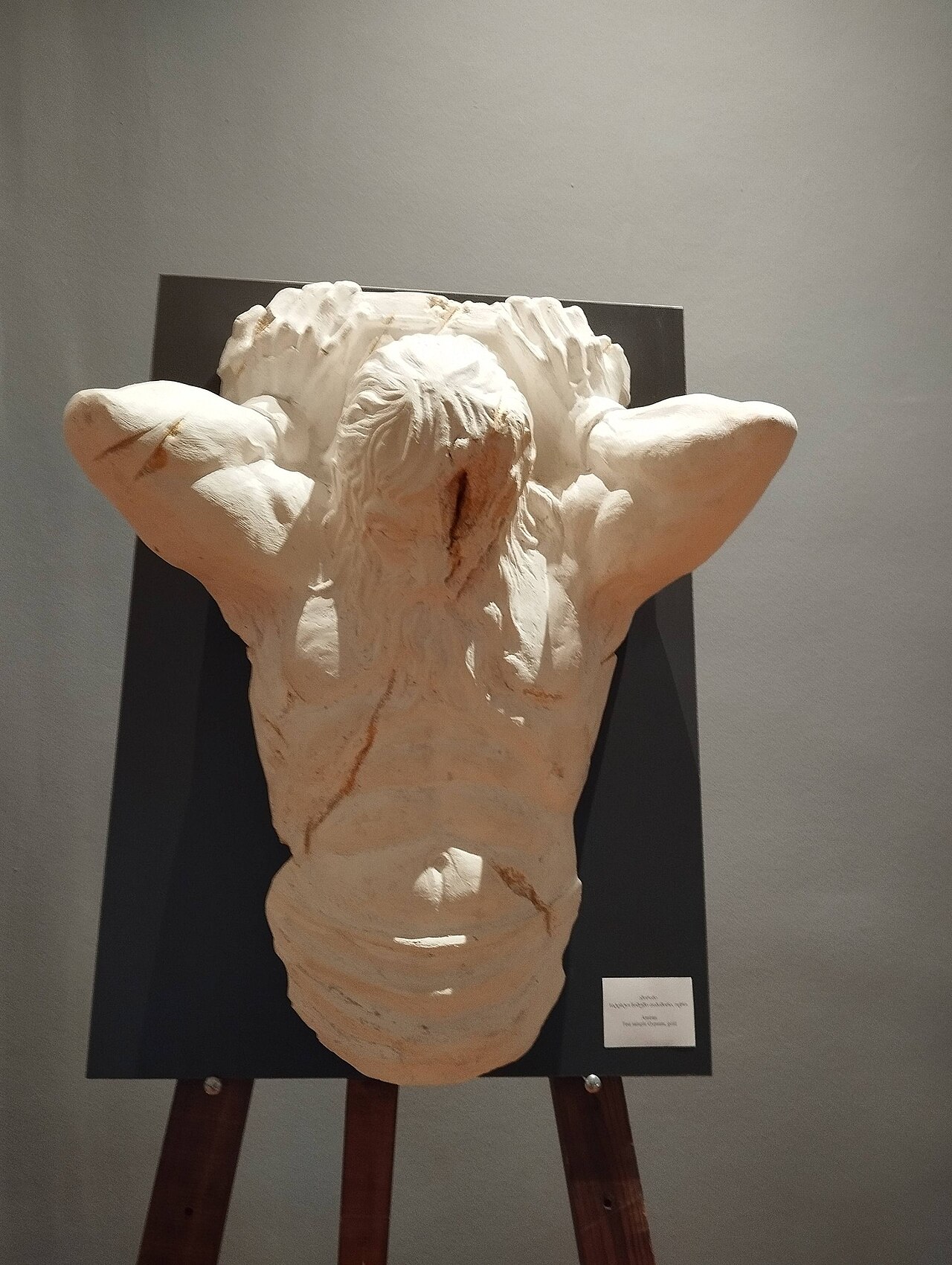
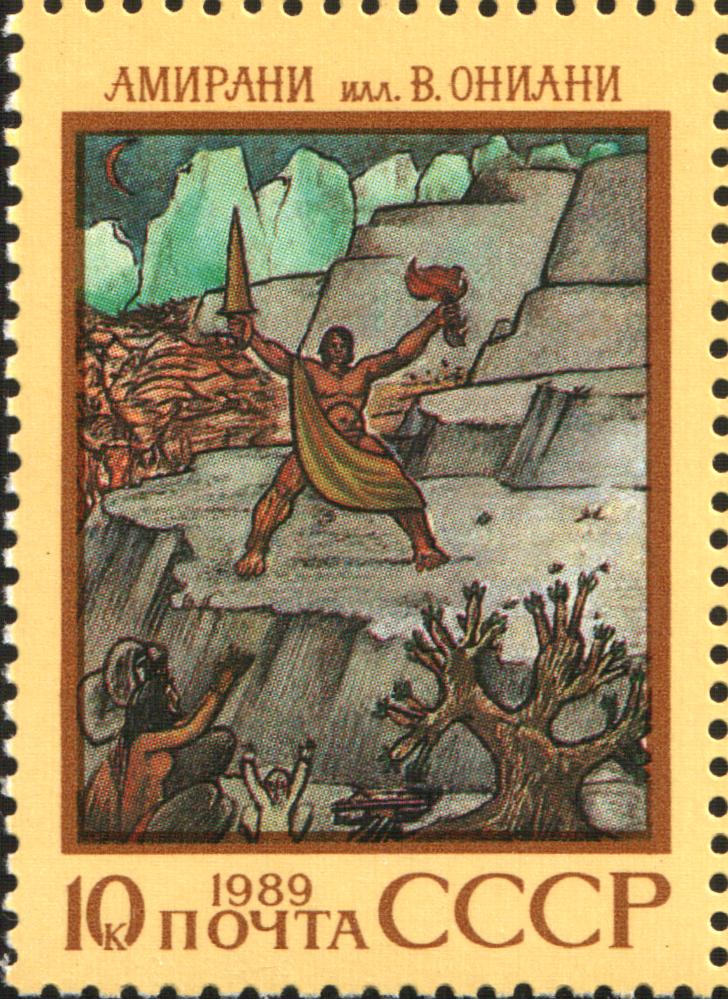
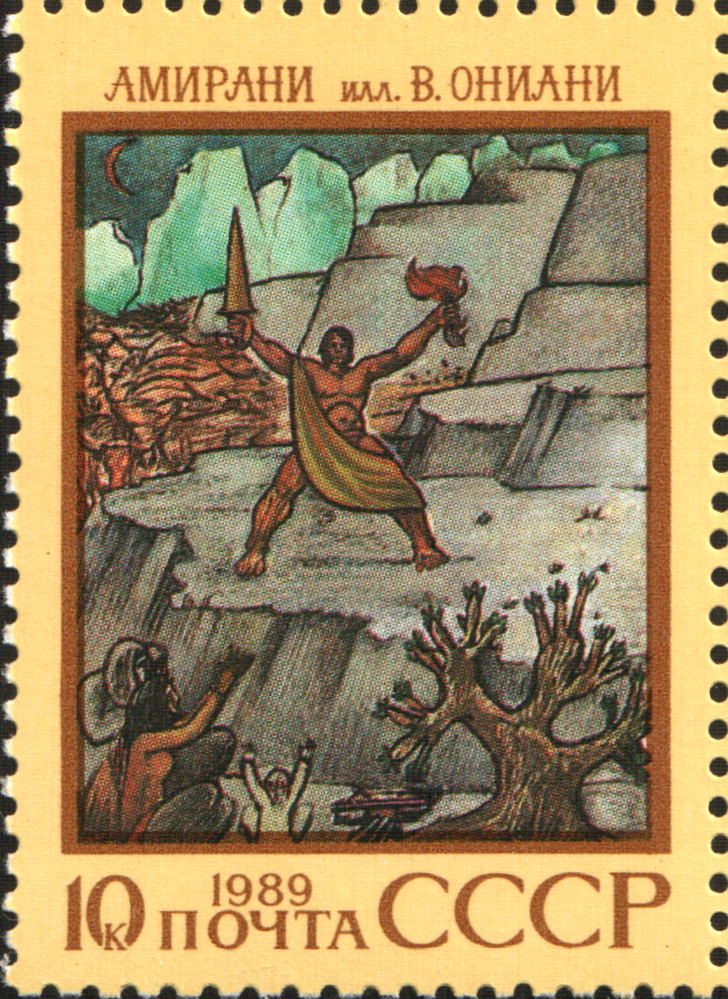
Amirani is a culture hero in Georgian mythology, often compared to the Classical Prometheus. He is a Prometheus-like figure who defied God by stealing fire for humanity, and was punished by being chained in the Caucasus Mountains, where an eagle eats his liver each day. The earliest written references to the Amirani myth date from medieval Georgian sources, with the Iron Age in the Caucasus beginning around the 12th-11th century BC.
- Era
- Medieval Georgian sources (earliest written references)
- Known for
- Defying God, stealing fire for humanity, being chained in the Caucasus
Lore & Background
Amirani was the son of Dali, a Caucasian goddess of the hunt, but was removed prematurely from her womb and raised by the hunter Sulkalmakhi and his wife Darejan, alongside their two natural sons Badri and Usup. He was raised violently in the wilderness, attacking strangers to test his strength. He fought against Devs—demonic giants—and later avenged his uncle's murder by killing the three-headed giant Baq’-Baq’. From each severed head emerged a worm that transformed into a dragon; Amirani killed the white and red dragons, but the black dragon swallowed him. He cut its belly open from inside and killed it.
Reader's Guide
Amirani's significance lies in his role as a culture hero who brought metalworking to humanity, a Promethean act that led to his punishment by God. His story reflects the transformation of myth over time, with parallels to the Prometheus legend. The myth is traced to the beginning of the Iron Age, between 3,000 and 2,000 BC, indicating its deep roots in Georgian and Caucasian tradition. His punishment—chained in the Caucasus Mountains with his dog Q'ursha, an eagle eating his liver—underscores themes of hubris and divine retribution. The legend also includes a cycle of near-freedom, as Q'ursha licks the chains until they weaken, but blacksmiths striking anvils restore their strength. Amirani's name was given to an extraterrestrial volcano, extending his legacy beyond mythology. His story, preserved in the epic 'Amiran-Darejaniani,' remains a key part of Georgian cultural heritage.
Did You Know?
- Amirani is the name of an extraterrestrial volcano.
- A blacksmith (often named Kviria) annually strikes his chains with a hammer to strengthen them.
- An eagle eats his liver by day, but it heals every night.
- He was raised by a hunter named Sulkalmakhi and his wife Darejan.
Origins and the Prometheus Parallel
Amirani, also rendered as Amiran in Georgian script, stands as a foundational culture hero within the Georgian epic tradition, occupying a narrative role strikingly parallel to the Classical Prometheus. Scholars trace the earliest strata of this legend to the opening centuries of the first Iron Age, placing its origins somewhere between three thousand and two thousand years before the common era. Across the many variant tellings preserved in oral and written tradition, one can observe a clear process of mythological transformation, yet the core motif remains remarkably stable: a Demiurge figure who transgresses divine law by bestowing the knowledge of metalworking upon humankind. For this act of defiance, Amirani is condemned to eternal bondage in the Caucasus Mountains, where a cursed hound named Q'ursha keeps watch over his chains. Each day an eagle descends to devour his liver, only for the organ to regenerate fully by nightfall—a cycle of suffering that mirrors the Promethean punishment almost beat for beat, suggesting a deep shared mythological substrate across the ancient world.
The Epic Journey and Its Combats
Born to Dali, a Caucasian goddess of the hunt, Amirani was expelled from her womb before his time and raised by the hunter Sulkalmakhi and his wife Darejan. He grew up alongside Darejan's two biological sons, Badri and Usup, in a brutal wilderness upbringing where the three boys routinely ambushed strangers, seeking only a test of raw strength. Their adventures escalated when they confronted the Devs, monstrous giants haunting the outermost edges of settled territory. The brothers' most celebrated quest was the slaying of Baq'-Baq', a three-headed giant responsible for their uncle's murder. Amirani severed all three heads in single combat, but each spawned a worm that metamorphosed into a dragon—white, crimson, and black. He killed the first two, yet the black dragon engulfed him whole and fled to the Black Sea or the underworld. From within its gut, Amirani slashed open its belly and emerged victorious. His final journey carried him across the seas to claim kamar, daughter of the demon king Kaji. The demon host destroyed his adopted brothers, and though Amirani slew every foe including their sovereign, he chose to take his own life in grief. Kamar's sorcery restored him and his fallen companions to life.
Hubris and the Threefold Torment
Left alone after the loss of his brothers, Amirani wandered until he encountered a colossal undead giant so immense that even he could not lift a single one of its legs. Desperate, he prayed to Ghmerti—the Georgian name for God—begging for supernatural strength. The deity answered, and Amirani's power swelled beyond all mortal measure. Yet with that power came arrogance. Inflated by his own might, he challenged God Himself to a direct duel, an act of supreme hubris demanding retribution. The divine punishment was threefold. First, he was bound to a stake driven deep into the earth. Second, a woman sealed him beneath a dome-shaped mountain of rock, his body locked in chains; a winged hound named Q'ursha gnawed at those chains until they grew thin, but each time they neared breaking, blacksmiths beyond the Caucasus rang their anvils and the links hardened once more. Third, once every year the mountain prison would open, granting Amirani a single night beneath the open sky. On one such occasion a compassionate stranger attempted to set him free, but the loud voice of a woman startled the mountain shut before the deed was done, condemning him to another year of darkness.
Legacy and Scholarly Resonance
The legend of Amirani has left an imprint that extends far beyond the pages of Georgian epic poetry. Most strikingly, the hero's name was bestowed upon an extraterrestrial volcano, the Amirani, anchoring this ancient mythological figure to the physical landscape of the cosmos. Within Georgia itself, the tale remains a living thread in the broader tapestry of national mythology, closely associated with the related narrative cycle known as the Amiran-Darejaniani. The multiplicity of surviving versions testifies to centuries of oral transmission and gradual transformation, yet the essential architecture of the story—the defiant Demiurge, the cosmic punishment, the chained hero in the Caucasus—has persisted from the earliest Iron Age strata through to the modern era. International scholarship has long recognized the myth's significance. Georges Charachidzé devoted a 1986 monograph to the Prometheus-Caucasus parallel, while Mikheil Chikovani produced a landmark 1966 study of the chained-Amirani epic in Russian. More recent work, including David Braund's 1994 survey of ancient Georgia and K. Tuite's 1998 article linking Achilles to the Caucasus, continues to place Amirani at the crossroads of Indo-European and Caucasian mythological traditions, confirming his status as one of the region's most enduring cultural symbols.
Gallery

More in Heroes in mythology and legend 1-24
Spotted an error? Know more?
This is a living reference — every entry is fact-audited, and reader corrections feed straight into our audit queue. Suggest an edit · See this site's audit record