
Amalickiah
Nephite dissenter who became Lamanite king and war leader.

Wikipedia / Wikimedia Commons
Amalickiah is a figure in the Book of Mormon, first appearing as a Nephite dissenter who sought to re-establish a monarchy among the Nephites. After failing, he seized the Lamanite throne through treachery and led a war to enslave the Nephites, ultimately being killed in his sleep by the Nephite commander Teancum.
- known_for
- Usurping the Lamanite throne, leading an invasion of Nephite lands
Lore & Background
Amalickiah initially led a group of Nephite elites, the Amalickiahites, in a bid to become king over the Nephites. This provoked Captain Moroni to raise an army and raise the Title of Liberty. Amalickiah fled to Lamanite territory with a reduced following. There he agitated the Lamanites to war, but when the Lamanite king sided with him against popular objection, many Lamanites fled to Onidah and appointed a new leader, Lehonti. Amalickiah camped at the base of a mountain where Lehonti's forces were encamped. After three rejected diplomatic overtures, Lehonti agreed to meet Amalickiah, who proposed merging the armies under Lehonti's command. Amalickiah then poisoned Lehonti, took control of the army, marched to the Lamanite king, and had him killed by an advance party. He then went in unto the Lamanite queen and obtained her favor, implying political manipulation, and crowned himself king.
Reader's Guide
Amalickiah's significance lies in his role as a narrative foil within the Book of Mormon. Theologians have appraised him as a mirror to the hero Ammon, noting that both stories involve encounters with a dead king and that Amalickiah and his brother Ammoron wished to be heirs to the throne, while Ammon and Aaron walked away from power. His leadership has been studied as a case of 'pseudo-transformational leadership' and as an example of autocracy that wins short conflicts but loses extended ones, consistent with democratic peace theory. His oath to drink Moroni's blood is seen as an inversion of covenant-making. The timing of his death at the New Year has been argued by some Latter-day Saint apologists to have religious significance, drawing parallels to Maya practices. The proposed etymology of his name, 'My King is Jah,' reflects a Hebrew origin, though this is speculative.
Did You Know?
- Amalickiah's name was frequently misspelled by scribe Oliver Cowdery as 'Ameleckiah' in the original manuscript, suggesting emphasis on the first syllable.
- He made an oath to drink Captain Moroni's blood after being frustrated by Moroni's defensive tactics.
- His assassination by Teancum occurred while he slept, leading to a Lamanite withdrawal.
- At least three Latter-day Saint apologists have argued that his death at the New Year held religious significance.
The Road to the Lamanite Throne
Amalickiah enters the Book of Mormon as a Nephite political dissident, rallying a faction of elites in a bid to restore monarchy under his own rule. Captain Moroni, commander of the Nephite armies, responded by articulating the values of the existing order in the Title of Liberty and raising an army to suppress the coup. Forced to flee with a reduced group of followers, Amalickiah crossed into Lamanite territory, specifically the land of Nephi, where his tactics shifted from open revolt to calculated manipulation. He agitated the Lamanites toward war against the Nephites, and the Lamanite king, over the objections of most subjects, sided with the dissidents. A peace-minded faction withdrew to Onidah and installed Lehonti as their leader. Amalickiah then executed a sequence of deceptions: he stationed his men in a valley, climbed a mountain alone to impress Lehonti, proposed a military alliance, and quietly poisoned his new ally. Securing command of the unified force, he marched on the Lamanite king, whose advance party was slain before his guards could react. The queen was then won over under the pretense of a war hero's loyalty, and Amalickiah crowned himself king.
Invasion and Assassination
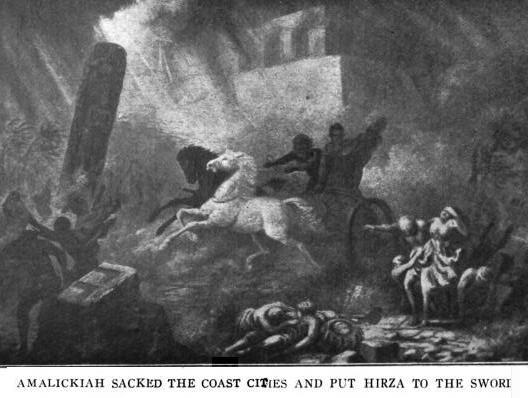
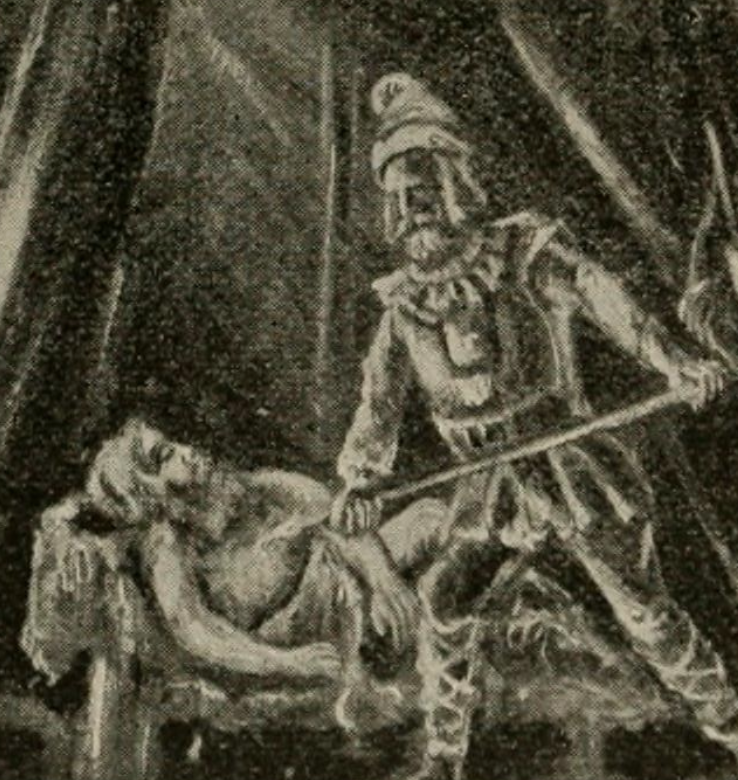
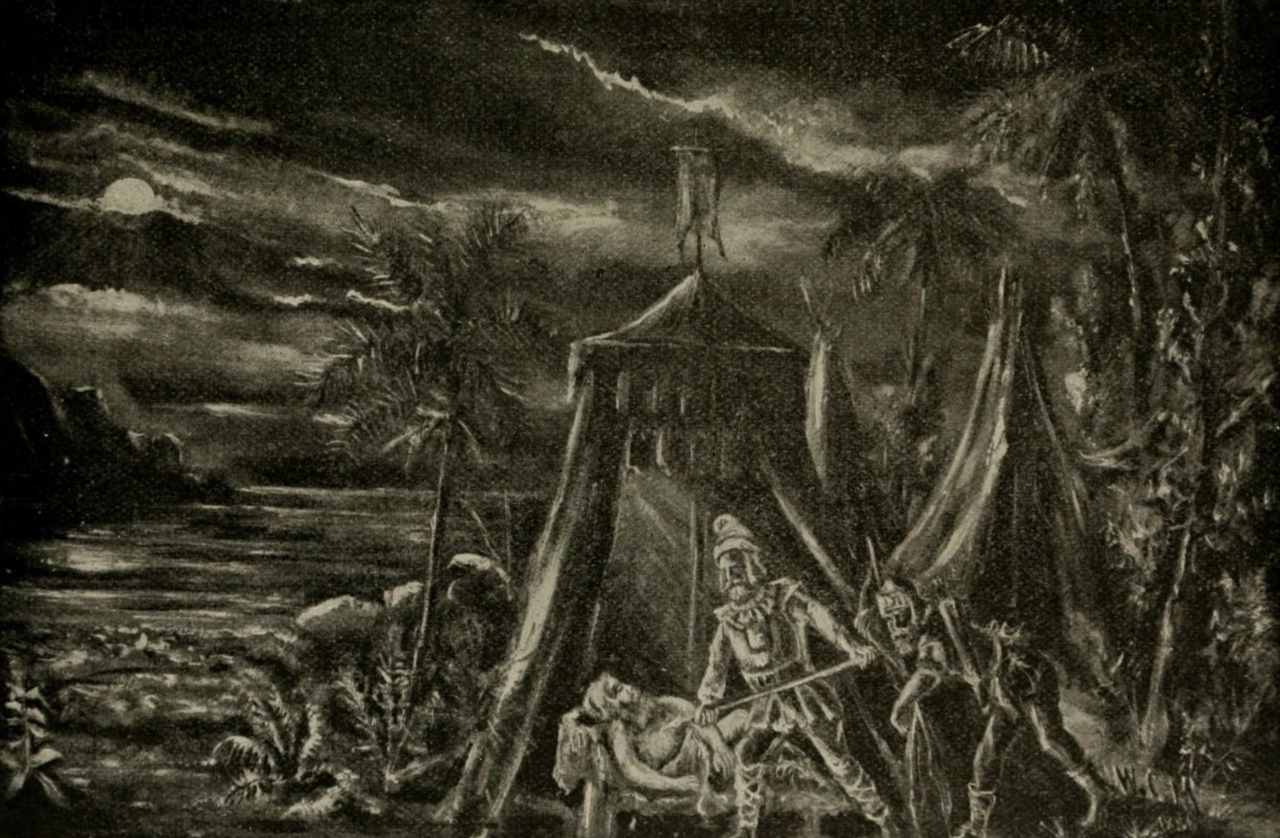
Once enthroned, Amalickiah launched an extensive propaganda campaign before ordering a full-scale invasion of Nephite lands, with the stated objective of subjugating the Nephite population. The expeditionary force initially met resistance from Moroni, whose innovations in fortifications and defensive tactics repulsed the Lamanite advance. Frustrated by these setbacks, Amalickiah swore an oath to drink Moroni's blood and assumed personal command of the army. Under his direct leadership, Lamanite troops succeeded in occupying seven coastal Nephite cities. However, Nephite commander Teancum intercepted the Lamanite force as it attempted a deeper penetration into Nephite territory. After a day-long battle, the two armies rested by the sea. That night, Teancum and an unnamed aide infiltrated the Lamanite camp, and Teancum killed Amalickiah in his sleep. The assassination triggered a Lamanite withdrawal and retrenchment, effectively pausing the invasion. Amalickiah was succeeded on the Lamanite throne by his brother Ammoron, who continued the conflict. The entire narrative arc appears in the latter half of the Book of Alma, anchoring Amalickiah as a pivotal antagonist in that book's military and political drama.
Mirror and Inversion in Theological Discourse
Scholars and theologians have long noted that Amalickiah functions as a deliberate narrative counterpoint within the Book of Mormon. Latter-day Saint theologian Joseph M. Spencer argues that the structure of the Book of Alma positions Amalickiah as a narrative mirror to Ammon, creating a thematic contrast between spiritual service and political ambition. He is also frequently read as an inversion of Captain Moroni, whose republican values stand in direct opposition to Amalickiah's monarchical aspirations. In leadership studies, Christopher J. Peterson labels Amalickiah a "pseudo-transformational leader" and a case study of what he calls the "Hitler Problem." David Rockwood and J. Gordon Daines similarly observe that both Amalickiah and Moroni are portrayed as highly effective leaders, yet Amalickiah's predisposition toward violence and selfishness marks a critical moral distinction. Political scientist Ryan W. Davis notes that Amalickiah's reign illustrates how short conflicts favor Lamanite autocracy while extended conflicts are ultimately won by Nephite democracy, a pattern consistent with democratic peace theory. His apparent disregard for Lamanite citizen safety reinforces the text's negative portrayal of wars driven by personal ambition.
Textual Traces and Mesoamerican Resonances
The textual history of Amalickiah's name offers a small but revealing window into the dictation process behind the Book of Mormon. In the original manuscript, the first two instances of the name are spelled correctly, but throughout the remainder of the text, scribe Oliver Cowdery frequently rendered it with substituted vowels, as in "Ameleckiah." This pattern suggests that Joseph Smith pronounced the name with stress on the first syllable, a detail that differs from the second-syllable emphasis most contemporary readers apply. Beyond the manuscript, Amalickiah's death has drawn significant scholarly attention for its timing. Apologist John L. Sorenson identified the first and last months of the Nephite calendar as the primary seasons for warfare, and A. Brent Merrill further developed the idea that Teancum's assassination carried ritual significance tied to the New Year. Allen J. Christenson, a specialist in Mayan culture, pointed to the Lamanites' described "terror" at their king's death at the New Year's beginning, drawing parallels to Maya practices that linked the renewal of kingship to the calendar cycle and preferred to commence military operations at the turn of the year.
Gallery
More in Heroes in mythology and legend 1-24
Spotted an error? Know more?
This is a living reference — every entry is fact-audited, and reader corrections feed straight into our audit queue. Suggest an edit · See this site's audit record